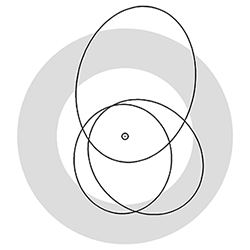
After a long while, I have added Hillsborough (CM1/2), which flew in summer 2024 over New York and fell in New Jersey, USA. It is an interesting new breccia which, according to Jenniskens et al. 2026 contains unique CM1 clasts rich in water and sodium, and perhaps more than the usual plethora of organic materials.
This is the 61th meteorite with a published photographic orbit. Depending on how you weigh the evidence, it’s the fourth or fifth CM fall with an orbit, and the seventh carbonaceous chondrite overall. Interestingly, so far, all carbonaceous chondrites with orbits have been either CMs or C-ungrouped (C-ung) falls, a pattern that already started with Tagish Lake (C2, 2000) and Maribo (CM, 2009). If you look at fall statistics in the MetBull database, there are now a grand total of 56 carbonaceous chondrite falls. Of these, 22 are CM falls, 8 are CV, 7 are CO, 7 are C or C-ung, 5 are CI, 3 falls each derive from the CR and CK and a single fall was a CB. Of these groups, only CM and C-ungrouped have falls with orbits so far (4-5 CM and 2-3 C or C-ung). Where are all the CO and CVs (and perhaps even the first CI with an orbit…) we might expeced to have seen at this point? It seems like we are overdue for such a fall – or, perhaps, the fall statistics as drawn from the MetBull database do not properly reflect the actual fall frequencies, because falls are not recovered without bias. If CM/C-ung falls are much more frequent than suggested by these fall numbers, but were not recovered as frequently (as other classes) before the time of all-sky-camera networks, this could explain why the other CC-classes are still missing, so far. Indeed, with 7 falls with orbits among 61 falls in total, CM/C-ung alone now constitute a bit over 10% of all meteorite falls with orbits – more than double the ratio of *all* carbonaceous chondrite falls (56) versus all known falls (1425), at just below 4%.
Interesting times! /m4